
Fourth period of IMF history: the seminars in Africa
The IMFs from North Africa to West Africa.
The IMF in the seminars of North Africa and West Africa.
1930: Tunisia, La Marsa seminary
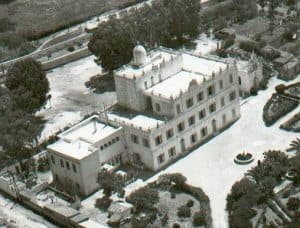
In 1930, Tunisia, under French protectorate since 1881, hosted the International Eucharistic Congress in Carthage. Mgr Lemaître, Archbishop of Carthage, was then concerned with providing “Tunisian” priests for the 200,000 Christians in his diocese. He addressed R.P. Coutour, then Superior General of the FMI, and Father Berger was dispatched to Tunisia where, in charge of the work of Priestly Recruitment, he held numerous meetings, preachings and conferences in all the parishes. In October 1930, a Minor Seminary, installed in the former palace of Cardinal Lavigerie, opened its doors to 21 minor seminarians. Four other IMFs had joined Father Berger. This Minor Seminary, which fulfilled its mission well for three decades and even provided France with a bishop in the person of Mgr Collini, bishop of Ajaccio then of Toulouse, only survived the independence of Tunisia (1956) for a few years, which deprived it of most of its students. It was closed as a Seminary in 1960.
1938: Morocco, Rabat-Souissi seminary
In 1937, Mgr Vielle, Vicar Apostolic of Rabat, decided, to comply with Canon Law, to create small and large seminaries. After obtaining information from La Marsa where they were already working, he asked the IMF to take charge. He plans to open at the start of the 1937 school year. But for the moment, there is only a large plot of land in Souissi on the edge of the military airfield. Everything remains to be done: build the "house", as the Mgr says, recruit candidates for the priesthood... Father Berger is hard at work at Easter 1937, but the first school year will not take place until 1938 with 9 students at the minor seminary and 4 at the major. Two other fathers then joined Father Berger. There are also 3 UdJ to whom Mgr asked “to enter the service of the Seminary”. They left the seminary in 1942, the superior general refusing to send them the help they needed. The Seminary will last until 1968. But, having become a diocesan college, mixed and even open to Muslims, with a small core of “seminarians”, it no longer corresponds to our vocation.
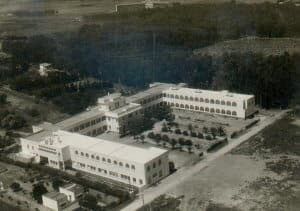
1952: Algeria, St Eugène seminary in Algiers
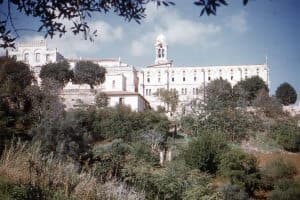
In 1952, Mgr Leynaud, Archbishop of Algiers, entrusted the management of the Minor Seminary of Saint-Eugène to the FMI, which the Vincentians had left to secular priests to devote themselves solely, according to their vocation, to the training of major seminarians, in Kouba. Only three fathers including the Superior and the Bursar for the year 52-53.
From the start of the 1953 school year, the group will be larger but there will always be a few priests from the diocese. This small seminary will accommodate up to a hundred students. Ten years later, in 1963, it was practically emptied of seminarians by the massive departure of the “Pieds-noirs” after the proclamation of Algerian independence.
The planned project of making it a Muslim college does not suit us due to lack of qualified personnel. We are leaving. But ASEKA (Association of Elders of St-Eugène and Kouba) still bears witness today to the role he played in the lives of those, priests and lay people who frequented him.
1968: Cameroon, Bafia seminar
Mgr Loucheur, bishop of Bafia, in Mbam, South Central province, in Cameroon appealed, during the spring of 1968, to Father Pierre Guibert, then superior general of the Sons of Mary Immaculate, to have "a stable and specialized community" capable of ensuring the training of its seminarians on a solid basis. The Congregation had just closed, one after the other, the FMI communities responsible for the North African Seminaries. Father Guibert then responded favorably to Mgr Loucheur.
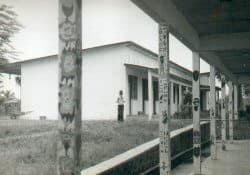
The PPs. Marcel Deau, Eugène Brethomé and Louis Devaux arrived in September 1968 to take charge of the St André Minor Seminary and the Bafia School of Catechists.
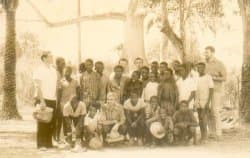
1968: Togo, Dapaong seminary
In May 1968, Mgr Barthélémy Hanrion, bishop of Dapaong (North Togo), came, on behalf of the bishops of French-speaking West Africa, to ask for fathers from our Superior General, Father Pierre Guibert. This involved opening, in his diocese, a seminary for seniors, intended to receive young people over the age of 18, wishing to be priests and who had not completed secondary education. In 4 years, they would be prepared to enter the major seminary of their country.
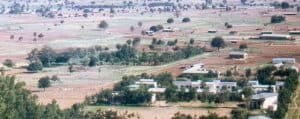
From October 1968 this seminar was opened by two IMFs, the PPs. Joseph Bourcereau and Gérard Dudit for 15 candidates. Then, the community grew, some FMI working at the seminary (until 1989), others for the diocese of Dapaong.
The seminary could accommodate 64 young people. It worked for 30 years. From 1978 to 2007, 155 young people were able to become priests at the end of their major seminary studies: approximately 1/3 of those who passed through Dapaong. Currently, the FMI serves the diocese, or our regional novitiate, opened to the north of the city in 1986.
1981: Burkina, Nouna seminar
The decision to open an FMI community in Nouna was made on February 9, 1981, in response to the request of Mgr. Zéphyrin TOÉ, bishop of the place, made on March 5, 1980.
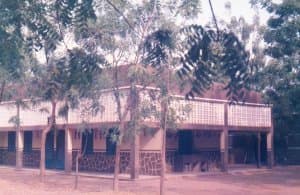
This involved taking charge of a small second cycle seminary, founded by 3 bishops in 1977, according to a particular project which included in the studies the elementary learning of certain trades: the students had one week of applied technical learning out of four.
In September 1982, PP. Jacques Rabiller and Pierre Remaud are named to the Nouna foundation.
The contract provided for succession by the diocesan clergy after ten years. In 1992, the FMI left the diocese of Nouna to settle in Bobo Dioulasso, near the major seminary of Koumi, where our first two professed people, including a deacon, followed preparatory studies for the priesthood.