
Sixth period in IMF history: a period of transition and… transmission
This period can be located after the Second Vatican Council (1962-1965). Several events around the 1970s marked the life of the congregation:
- The end of the minor seminaries in France and North Africa as well as the Ste Marie juniorate, and two requests for seminars in sub-Saharan Africa
- The work in the Congregation for a return to the sources of our charism and its adaptation to our times, following the Second Vatican Council for the renovation and adaptation of religious life.
- New houses of religious formation, particularly in “mission countries”.
I. The end of a period: institutions are closing little by little
Small seminars in France and North Africa
The education of young people in minor seminaries and the Ste Marie juniorate was until then an important part of the mission of the FMI and mobilized a good number of them. In a general context of a changing and increasingly secularized society, marked in particular in France by secularism, the small seminaries and juniorates which aimed to welcome young people to become priests or religious, were increasingly closing their doors, for lack of candidates. Following Independence (Tunisia and Morocco in 1956 and Algeria in 1962), the small seminaries of La Marsa (Tunisia), Rabat (Morocco) and Algiers were closed, La Marsa in 1953, Algiers in 1963 and Rabat in 1968. The IMF left North Africa. In sub-Saharan Africa, however, requests reach the Congregation. The Fathers, then available, left to take responsibility for three seminars. They arrived in 1968 in Bafia in Cameroon, to found a small seminary, in Dapaong in northern Togo, to found a seminary for seniors, and a little later in Nouna in Burkina to take responsibility for another seminary for seniors.
The Sainte Marie juniorate
The Sainte Marie juniorate could accommodate around a hundred young people. Each year, a dozen young people presented themselves for the “Fathers of Chavagnes”.
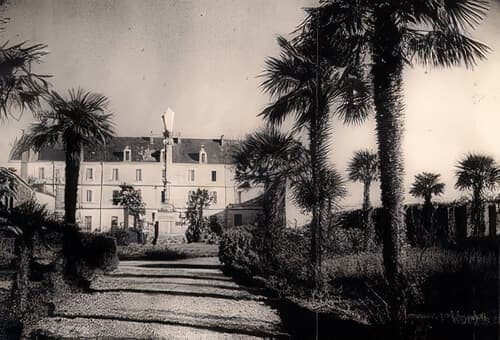
The minor seminary of Chavagnes, nearby, also welcomed many young people for the diocese of Luçon. The two “seminars” due to lack of staff, had gradually changed direction and in 1964, they were now officially united under the name “Ste Marie de Chavagnes college”.
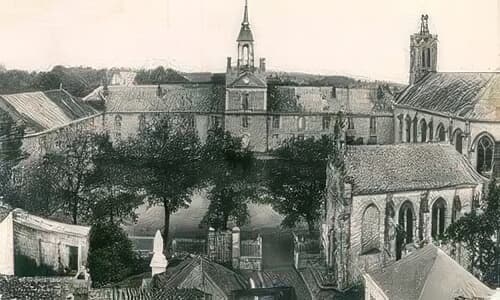
The scholasticate at Saint Sauveur
This house, the first in the congregation, was built in 1850 to bring together diocesan missionaries. Since 1921, it had welcomed numerous young FMI for religious training, novitiate and scholasticate.
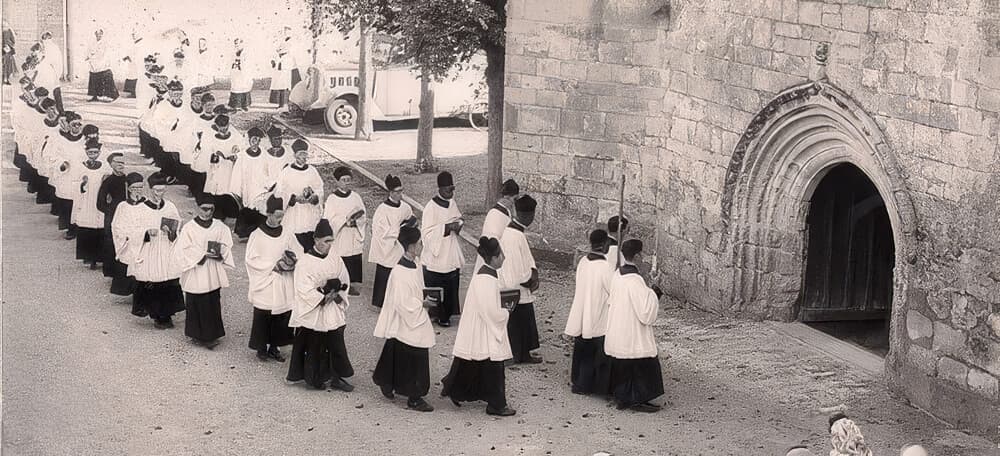
In 1968, their number had decreased, the Saint Sauveur house then welcomed novices and philosophy students from the Notre Dame Federation while the FMI theology students were now in Bordeaux and participated in the life of the major seminary with other theologians from several dioceses.
The end of “diocesan missions”
The diocesan missions were part of Father Baudouin's first missionary project. What will we claim? he wrote to Mrs. St Benoît in January 1802: bring together a number of zealous and pious priests under the observance of the rule of the Incarnate Word, ... gathered in a house, they would go to mission in the countryside and (in the) cities... and a number of pious girls under the same rule adapted to their sex and their functions, who would assist them in the education and instruction of girls and women, and in the care of the sick; that's the goal.
The St Sauveur house in Mouilleron-en-Pareds, before becoming a training house for the FMI, was the first base for diocesan missionaries. For many years, FMI diocesan missionaries traveled the roads of Western parishes for different “missions” and preaching…
In 1968, the five FMIs serving diocesan missions, to the community of Meslay, were wondering about their future. These “interior missions” were deeply questioned and, throughout France, many missionary teams had completely disappeared. Among the five FMI of Meslay: the two eldest believed that they could still provide authentic service to diocesan pastoral ministry but the three youngest requested another apostolic orientation.
This was the end of the Congregation's diocesan missionary teams in France.
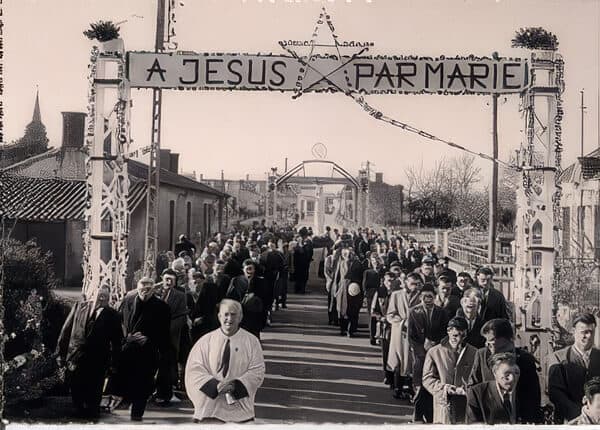
II. A return to basics: the special chapter of 1968-1970
In the wake of Vatican II, for the IMF, as for many other congregations, it was a sort of Estates General, with representatives of all the apostolic projects of the IMF, from the communities of France to the distant missions of the Antilles, Venezuela, and Canada. It was not a question of founding a new congregation but of returning to draw from the sources of our charism to better open ourselves to the future, in a changing world, to keep our original identity and open ourselves to the calls and needs of new generations. This was the opportunity for many FMI, for several years, to return to the sources for a better knowledge of the life of Father Baudouin: the revolution, the exile, the time of “hiding” in Les Sables d’Olonne, his missionary experience and his responsibilities as an educator of young people with a view to the priesthood and spiritual guide. But above all, this return to our sources made us rediscover Father Baudouin as a spiritual guide introducing us to the Mystery of the Incarnation as a school of life and prayer.
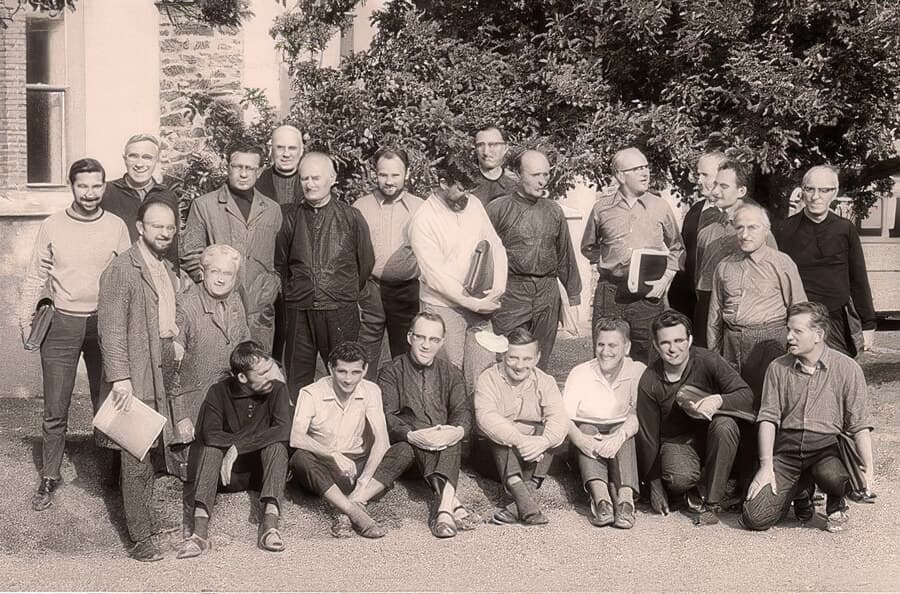
After several tests, new constitutions for our religious family were approved by the Roman authorities in 1986.
New perspectives are opening up for the IMF.