Third period in IMF history
At the turn of the 20th century: persecution and exodus.
1897: England.
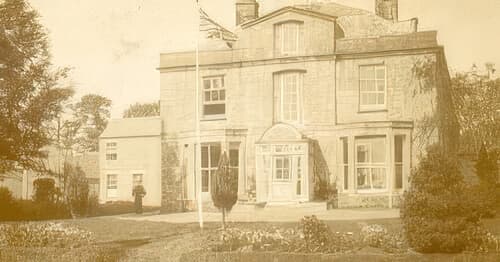
In St Lucia, as in Dominica, Creole and English are spoken. Father Tapon, vicar general of Castries, wanted to found an establishment in England, to allow young missionaries destined for the West Indies to learn English. In September 1897, Cardinal Vaughan, Archbishop of Westminster, offered a position as Chaplain for a convent of English Sisters in Braintree-Bocking (Essex). In 1899, the FMI acquired the property of Belmont House in Shaftesbury (Dorset). In 1903, when the FMI were expelled from France, Belmont House became the novitiate and scholasticate house and then the General House of the Congregation. Father Ernest Jeanneau was the last FMI to leave Shaftesbury in 1999.
1902: Canada. Saskatchewan – Quebec.
From 1901, to face threats of expulsion and exile from the French government, the General Council of the FMI Fathers took steps for foundations outside France. The culmination of this research was the founding of Canadian missions at St Hubert and Cartier in Saskatchewan and Manitoba (two provinces in central Canada). In Cartier the Fathers began a juniorate in July 1904 but the buildings were ravaged by fire during a harsh winter in November 1906. Father Joseph Bordet was the last FMI to leave Saskatchewan definitively in 1953. But, in 1954, to respond to the invitation of Mgr Coderre, bishop of St Jean de Longueuil, he came to Quebec to establish an FMI foundation in La Flèche, in the southern suburbs of Montreal.
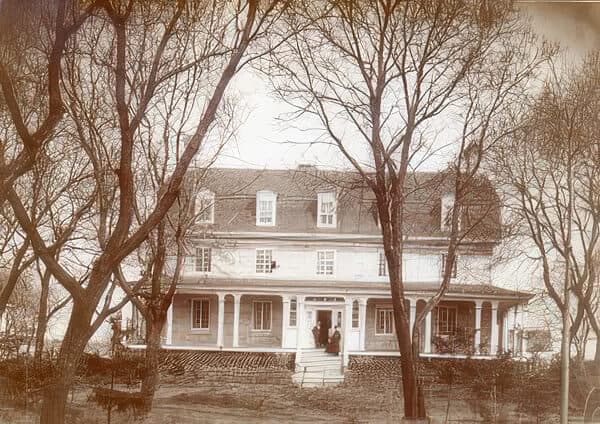
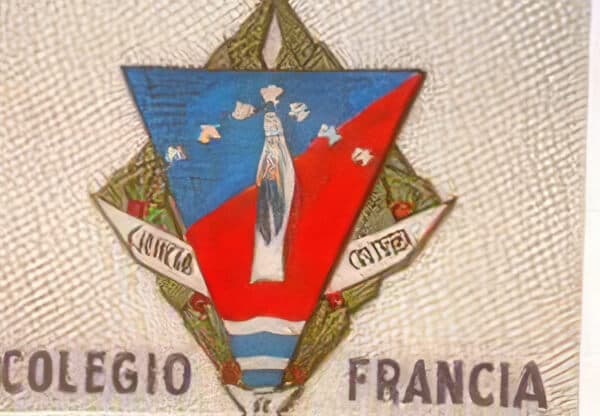
1903: Venezuela, the French college in Caracas.
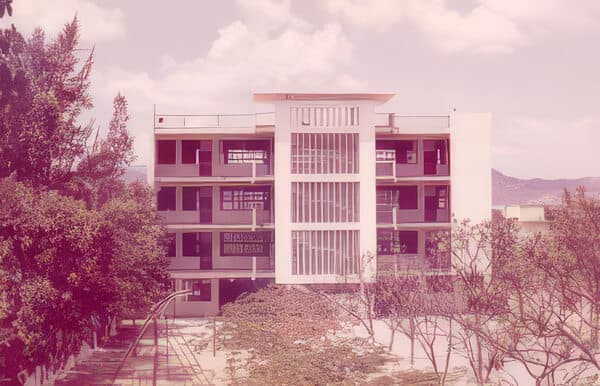
The French families who resided in Caracas, and many other families, very much wanted for their children the educators that sectarianism was expelling from France. The Alliance Française, with the support of the French ambassador Mr Viener, took steps with its ministry in Paris, explicitly requesting that this work be entrusted to a religious congregation. The Sons of Mary Immaculate were called upon.
Father Dugast, missionary in St. Lucia (English-speaking West Indies) was responsible for making the first contacts. He arrived in Caracas in mid-March 1903. In May 1903, the Superior General was officially informed that the Congregation had been dissolved… and on June 18, 1903 the French College of Caracas began its classes with 19 students.
1909 Terloo (Belgium)
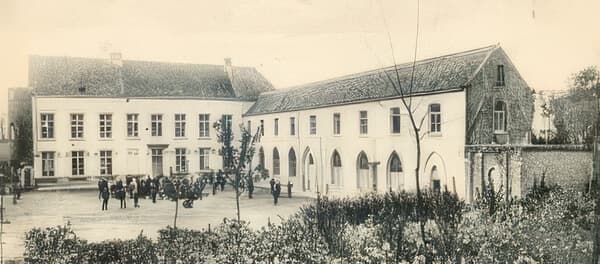
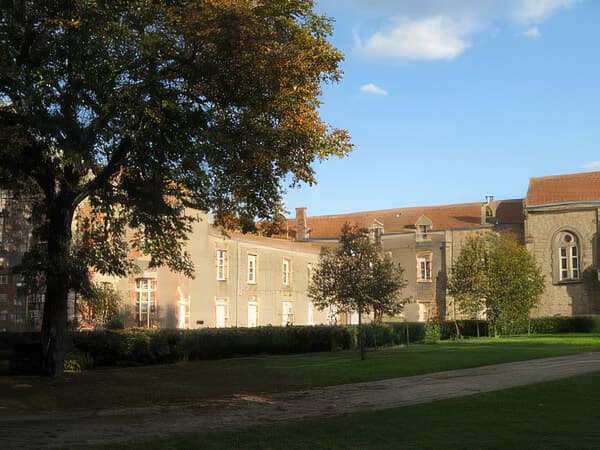
The law of 1901 in France prohibiting from teaching all religious belonging to an unauthorized Congregation, the FMI novices and scholastics had to leave France and join the house of Belmont in England. We also tried to welcome the youngest there to form a juniorate but the Congregation quickly moved towards a closer place in Belgium, not far from a Carmel where an FMI Father, Father Ailleaume was chaplain. The Terloo juniorate was opened in 1909 but had to close its doors in 1914 following the invasion of Belgium by the German army.
1914 Meslay (Vendée)
Due to the invasion of Belgium by the German army at the start of the 1914-18 war, the juniorate students had to leave Terloo and follow the crowd of refugees towards France. But where to go? The house of Meslay, residence of the Passionist Fathers in Vendée, near Montaigu, had remained abandoned since their departure following the laws of 1901. Mgr Catteau, bishop of Luçon, as well as the prefecture of Vendée were in favor of the IMF establishing their juniorate there. In December 1914, the house welcomed 28 young people. At the end of the war, in 1919, the Passionist Fathers returned to Meslay and the IMF juniorate came to Chavagnes to occupy the Ste Marie house. 1960. The Passionist Fathers leave Meslay and the IMF return to live there again. Meslay will then serve as a residence for “interior missionaries”.